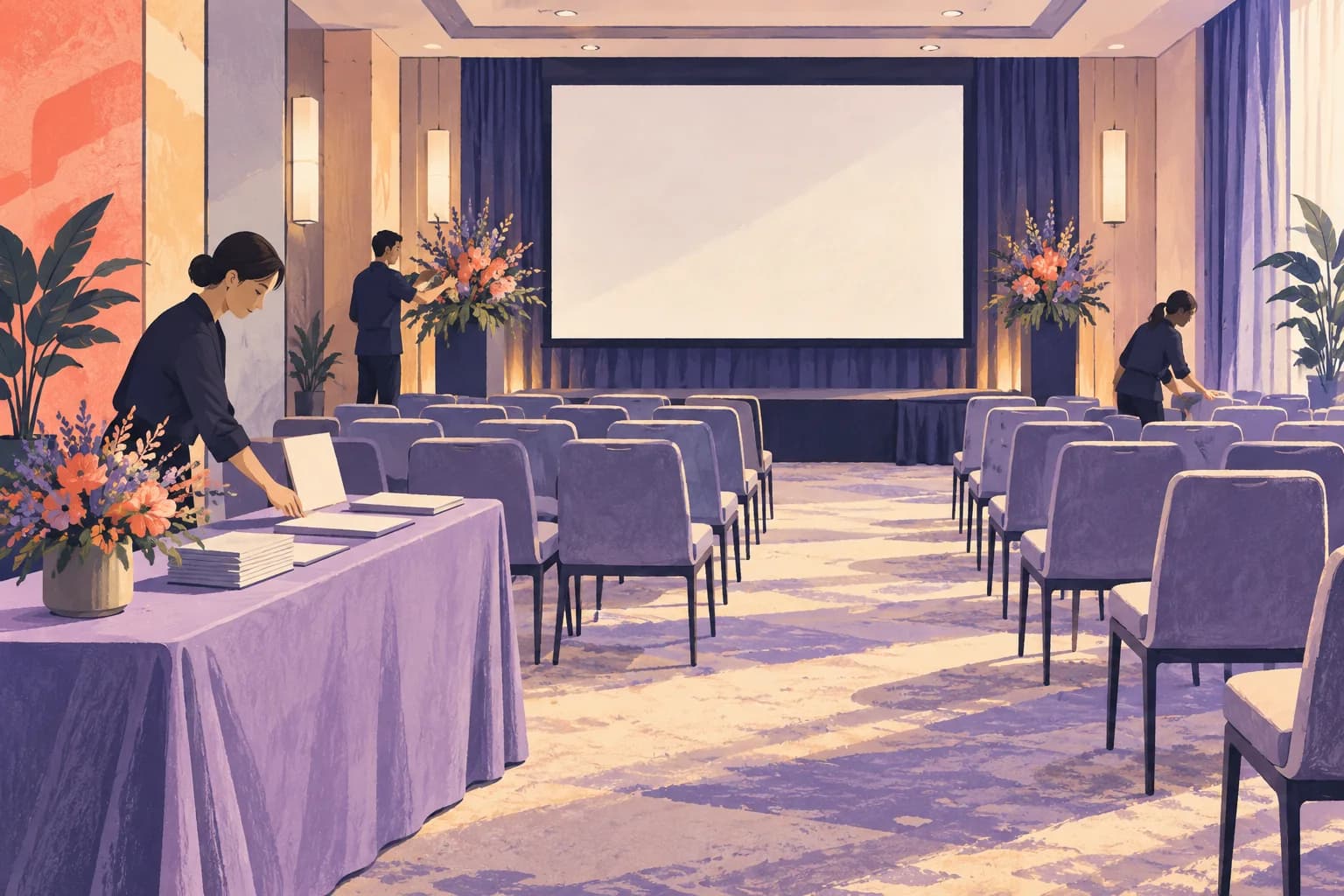
A small-business networking breakfast works best when introductions serve a purpose. Before booking a room, decide whether guests should meet potential clients, exchange skills or learn a specific topic. That decision changes the invitation, seating plan and follow-up. For a 40-person breakfast, a short structured introduction can produce more useful conversations than an hour of unscripted mingling.
What should a 40-person brief contain?
Write a one-page brief with the date range, target audience, 40-person maximum, arrival time, dietary requests, access needs, speaking slot and end time. For an illustrative programme, allow 20 minutes for arrival and food, 10 for the host's welcome, 25 for paired conversations, 20 for small groups and 15 for optional open networking. This 90-minute schedule is a planning example, not an event listing. Keep some standing space away from the food queue; ask the venue for its actual room layout and capacity before advertising places. If using an NParks space, its event-venue booking guidance sets out when a booking application is required. A private venue will have different terms.
Invite people by describing who the breakfast is for and what they will do. A registration form might ask for a name, organisation, role and dietary or access request. Consider whether every field is necessary. PDPC's data-protection obligations provide the official starting point for collecting and using personal information. Do not make a list of attendees public or send it to sponsors merely because people registered. Tell people separately if any optional directory or sponsor follow-up is proposed, and obtain the appropriate permission.
How can venues and caterers be compared?
Send the same brief to at least two rooms. Ask for seating, food service, microphones, arrival access, minimum spend, taxes or service charges, setup time, overtime and cancellation terms. Request a total payable amount and a hold deadline in writing. A fictional venue might offer a lower room fee but require exclusive catering; another might include basic equipment but charge for early setup. Add the full expected cost and choose the option that fits the programme, rather than the cheapest room line.
Give the caterer a target serving time and a realistic headcount deadline. Our party caterer guide provides a comparable menu and service brief. If the room is used for a learning session, the workshop venue checklist covers acoustics and sightlines. The AI meetup guide shows a different agenda when live demos are involved.
What should happen after breakfast?
At the end, tell guests exactly what happens to contact details. Send the promised practical summary to registrants through the channel they chose, and offer optional introductions only after both parties agree. Track useful outcomes, such as a confirmed follow-up meeting, instead of assuming that every exchanged card is a lead. If a business wants to sponsor a future breakfast, distinguish its paid placement clearly from editorial recommendations. You can send EventsHub an event-brief question for help clarifying requirements; we do not claim an available venue or sponsor match.
Check whether the organiser needs a wet-weather or transport update, and name the person who will send it to registered guests.
Common questions
Do I need a microphone for 40 guests?
Ask the venue to test audibility in the proposed layout; it depends on room acoustics and the programme.
Can sponsors receive the registration list?
Do not assume that registration permits it. Explain any separate use clearly and assess the applicable PDPC obligations.
When should I commit to catering numbers?
Get the caterer's written deadline and adjustment terms before opening registration.
Sources
- event-venue booking guidance nparks.gov.sg
- data-protection obligations pdpc.gov.sg
Something changed or worth adding?
Send a correction or suggestion